Photo collection of Leighton Lovitt of HMCS Brandon (K149), WW2.
Many thanks to Bill Gard, who passed these images and letter on to me. Bill said "I’ve come across an envelope, in my rec room, containing a letter and wartime photos sent to me in 2013 from former crew member G. Leighton Lovitt who was living in Victoria, BC."
Leighton Lovitt
Victoria, B.C.
March 8, 2012
Mr. Bill Gard
Lower Sack Ville, N.S.
Dear Bill:
Re: The Corvette K149 – HMCS Brandon
Further to our recent telephone conversation, I enclose photographs and notes which may be of interest to you, including a photograph of the Commissioning Crew of Corvette HMCS Brandon K149, built in Levis, Quebec, across the St. Lawrence River from Quebec City.
I had a number of different responsibilities aboard ship:
– Ship's Supplies
– Captain of Starboard #1 Depth Charge Thrower
– Coxswain of a Lifeboat
– Receiving and Deciphering Code in a Locked Code Room (Locked into
the Code Room behind the Wheelhouse with 5 Allied Code Books – The key was
held by the 1st Lieutenant). One very interesting message I decoded in convoy
out of St. Johns in 1941, several days after Pearl Harbor:
"Hello Canada. Glad to be with you"
Four new American Destroyers had joined our convoy escort group. Many days later, up off of Iceland, two of these were torpedoed by German U-Boats. One was the USS Kearney. The first ships the Germans went after in a very large convoy were the American destroyers. They were not happy that the Americans had joined the war.
At sea we wore mostly knitted wool hats and sweaters which came aboard in large cardboard boxes. They were hand-knitted by mothers at home. We used to wear 2 to 3 sweaters and duffel coats. The theory was that if we ended up in the ocean, we would last longer. One time in Reykjavik, Iceland, we came along side a British supply ship, HMS Hekla, for supplies. They reported us to the British Admiralty for not being in the "rig of the day" . . . . unbelievable considering the conditions we were living under.
The Brandon was in and out of various ports in England, Scotland and Ireland – Derry, Greenwich, Skapa Flow, Tynemouth and South Shields. At that time we were on the Newfy/Derry run, from St. Johns to Londonderry.
Life on a corvette was pretty rough. We were confined to a very limited space for long periods of time and often in severe weather conditions. In heavy weather, a lot of the crew were very seasick. When picking up survivors from torpedoed merchant ships, we only ever made one trip because the convoy had to keep moving. Sadly we left behind many merchant seamen in the water and on Carley Floats. Those survivors we picked up were left with the ambulances lined up at the dock upon arrival in port.
No matter how bad the weather, "Up Spirits" was piped at 11:30 a.m. We would all line up with a cup for 2 Imperial Ounces of 100 Proof Rum (Known as a "Tot"). 95% of the Crew were "Grog" and anybody who was "Temperance", we bought their Tot. We saved a lot of it and partied ashore. If any crew were to become intoxicated while we were in convoy, they would issue "3 and 1", where 3 Tots of water went into every 1 Tot of Rum. That way the Rum would not keep. Our solution was to put it in large 5 Gallon pottery jugs, add a large quantity of raisins and take it down to the Engine Room. On the Port and Starboard side of the Engine Room were Stabilizer Platforms where we would secure our jugs of Rum and leave them there for a month or more. The guys would check them periodically and when they were "Talking", we would bring them down and enjoy "Screech". (I still have a copper Tot measure from the Brandon. It is engraved: "K149". I also have an Empty Shell Case from my Starboard Number 1 Depth Charge Thrower.)
One trip, coming back from the UK, with a convoy of "Empties", we hit a terrible storm in the North Atlantic. The convoy was scattered all over the ocean. We never saw them again. The bridge of one Canadian destroyer was crushed down into the ship. The skipper was killed in his bunk and cut out when they finally made port. The destroyer was steered into port with the wheel in the Tiller Flats. During that storm a plate was split in the Hull of the Brandon. This caused flooding in the engine room. Men were tied to the Donton Pumps which were turned by hand. For days, they took shifts turning the pumps. We drifted very slowly down the coast of Greenland and finally arrived in St. Johns harbour. Upon docking, the Crew headed up to the Belmont Inn, a large Beer Hall. There, other ship's crews informed us that our ship had gone down near Iceland. We said "No way. We are tied up at Bowren's Wharf". After that the beer flowed to our table all night!
I enclose pictures of the Corvette Rest Camp which was located about 20 miles outside of St. Johns in a small village near a large river. We went there for about 2 weeks and lived in Bell Tents, where we also had a Cook Tent for our meals and a Beer Tent for fun. It was a nice change of pace and the people there were very kind to us, even inviting us to dinner in their homes.
Good Luck with your program.
Sincerely,
Leighton Lovitt
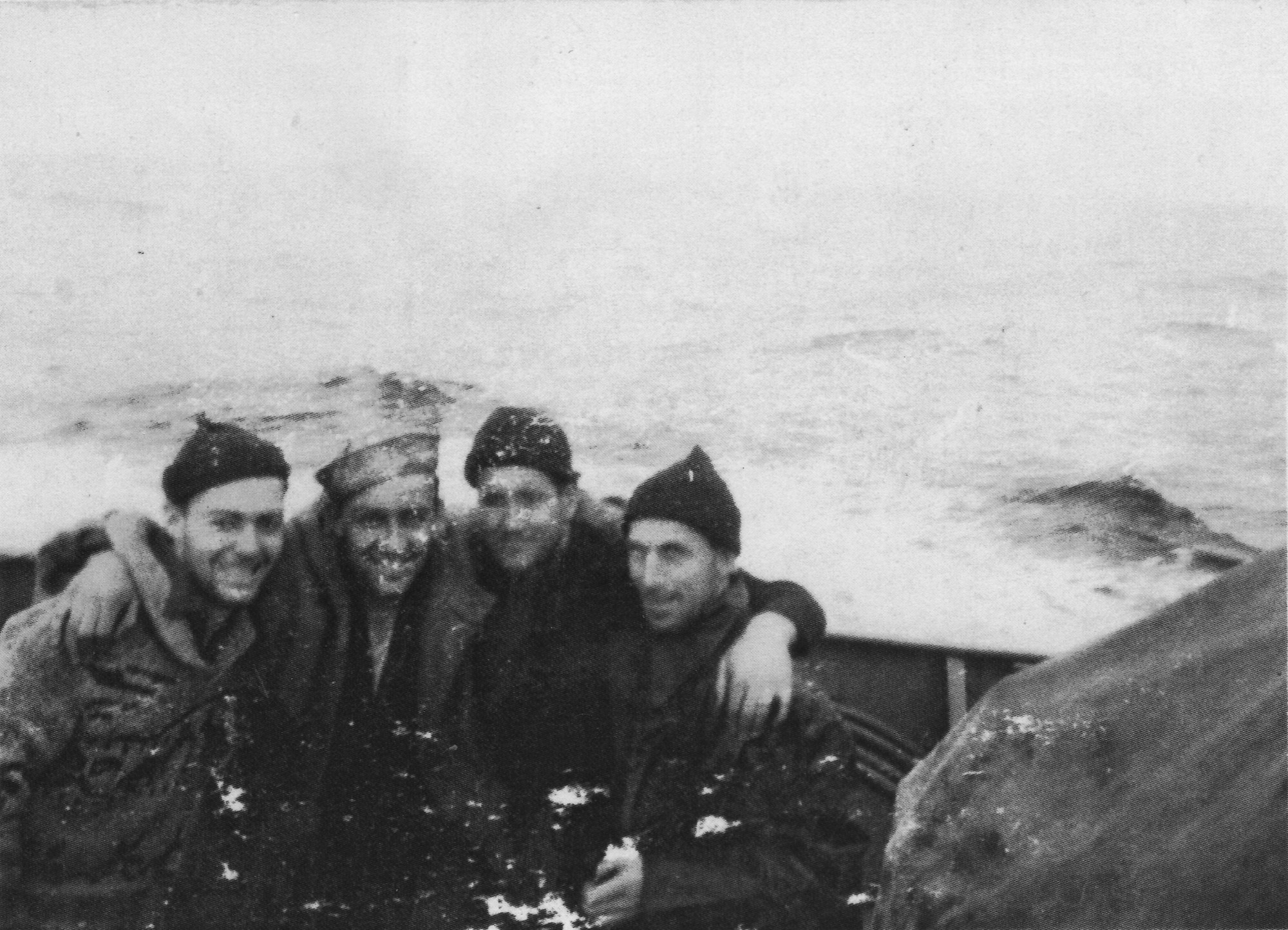
"My Lifeboat Crew – Tough Guys"
Left is G.L. Lovitt; far right is Potty (Engineer).
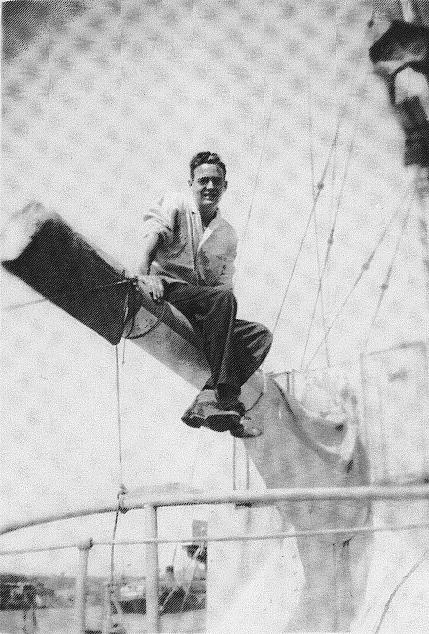
G.L. Lovitt relaxing on the 4-inch gun on HMCS Brandon.
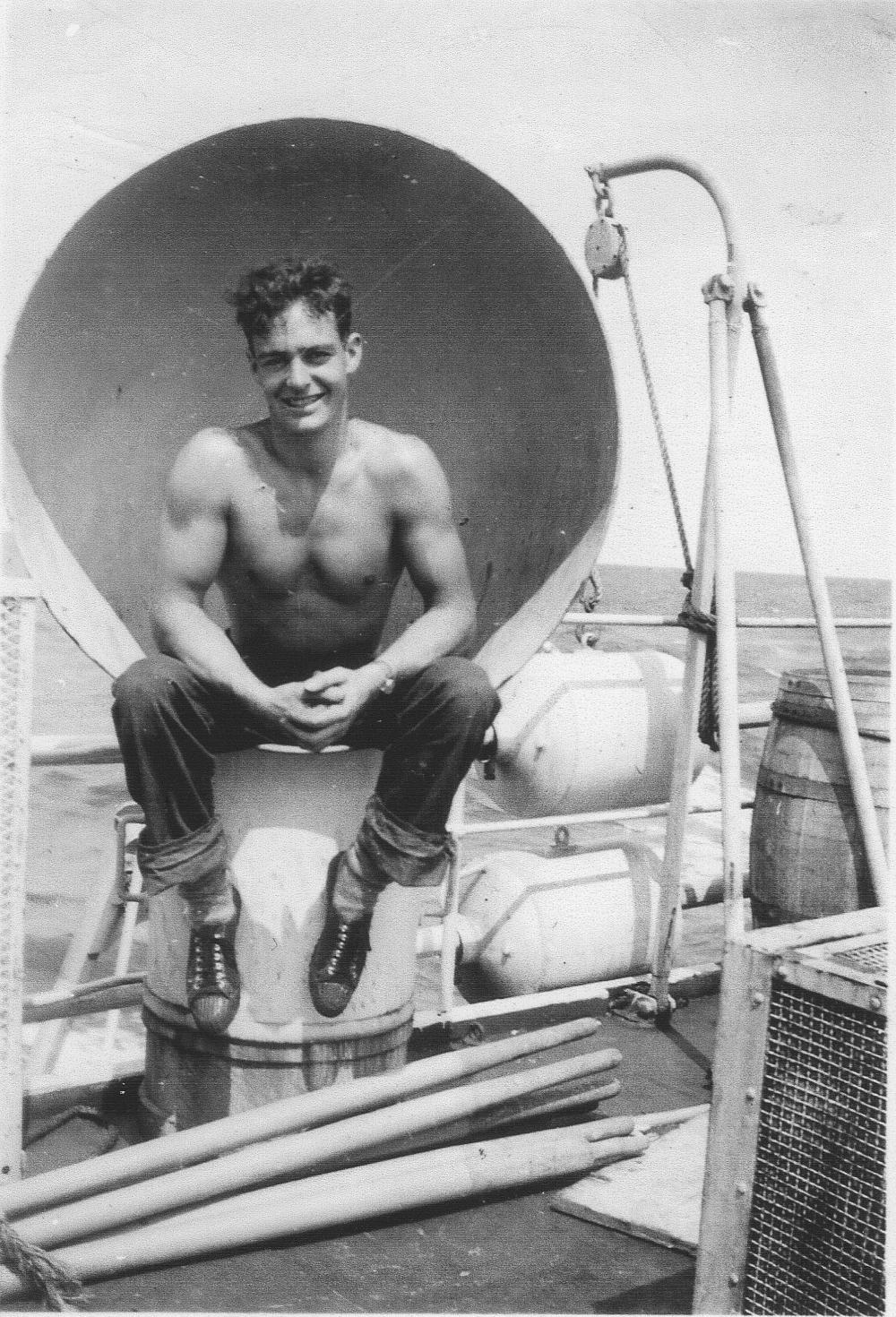
G.L. Lovitt warming himself on the engine room heat vent.
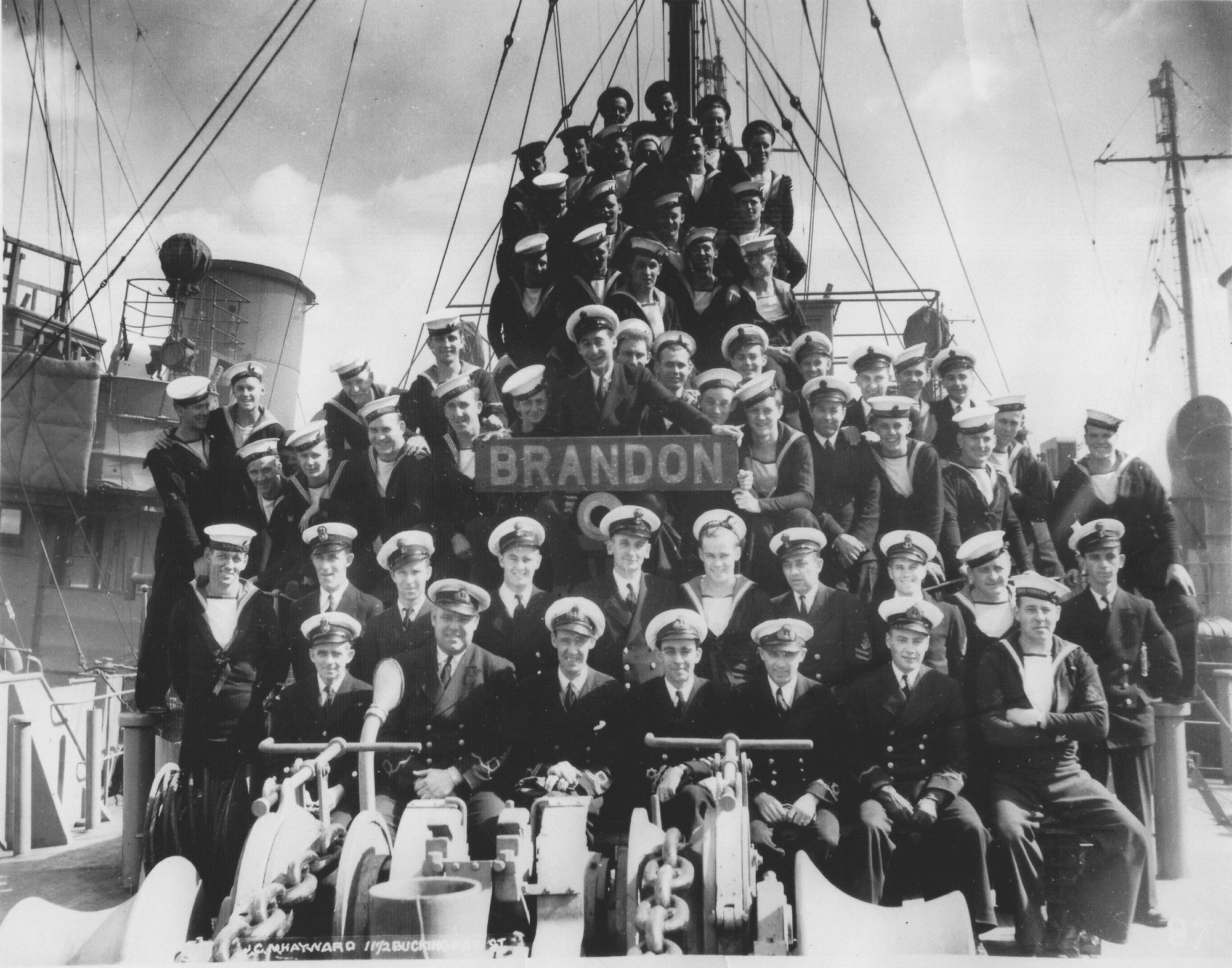
HMCS Brandon Commissioning crew photo.
G.L. Lovitt id's himself at "Right side, 4th rows up, 5 Left".
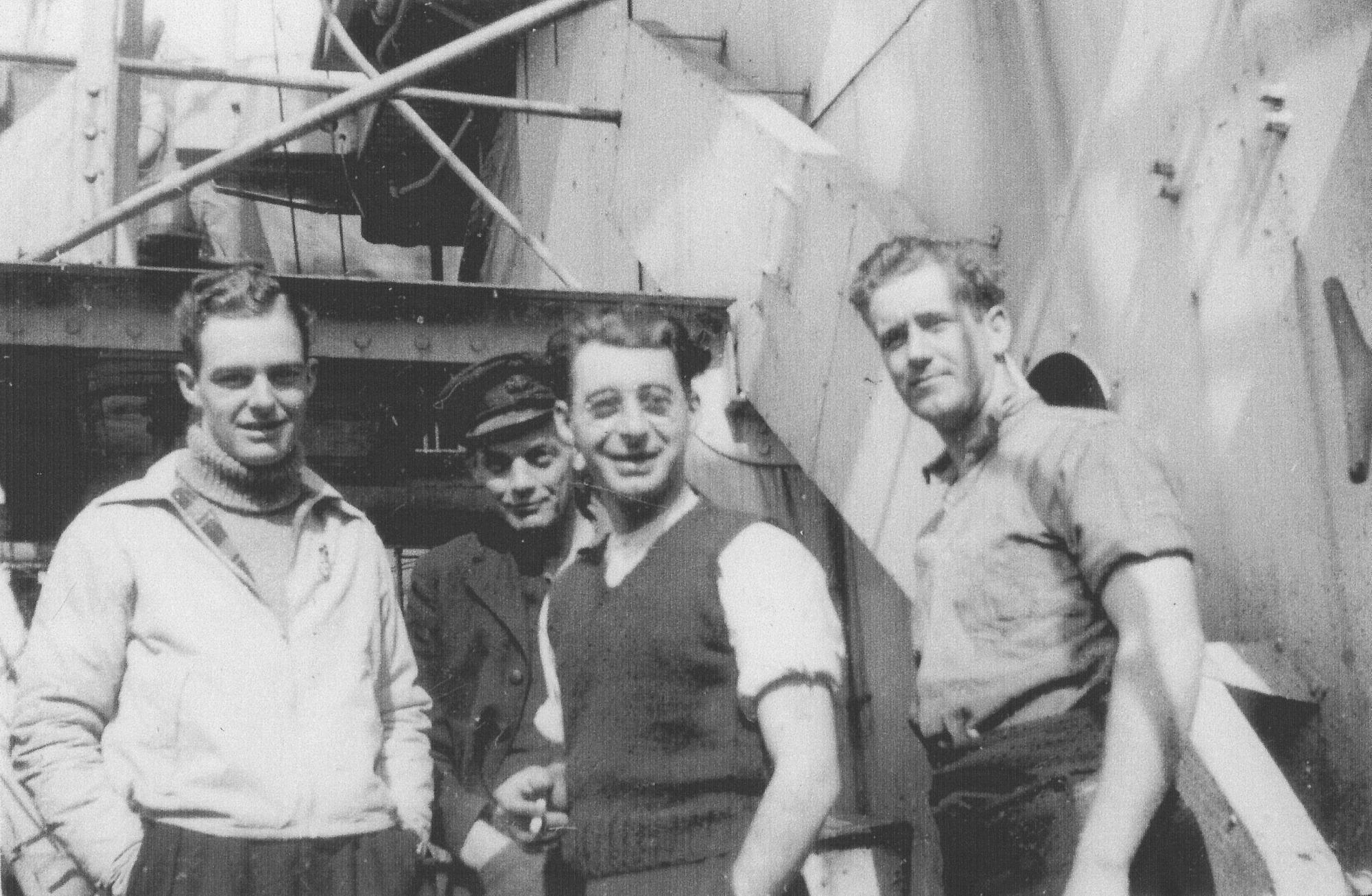
"Port Side K149 Brandon"
Left to right: G.L. Lovitt, Dan Miller, Henry Lawrence, Bob Semple.
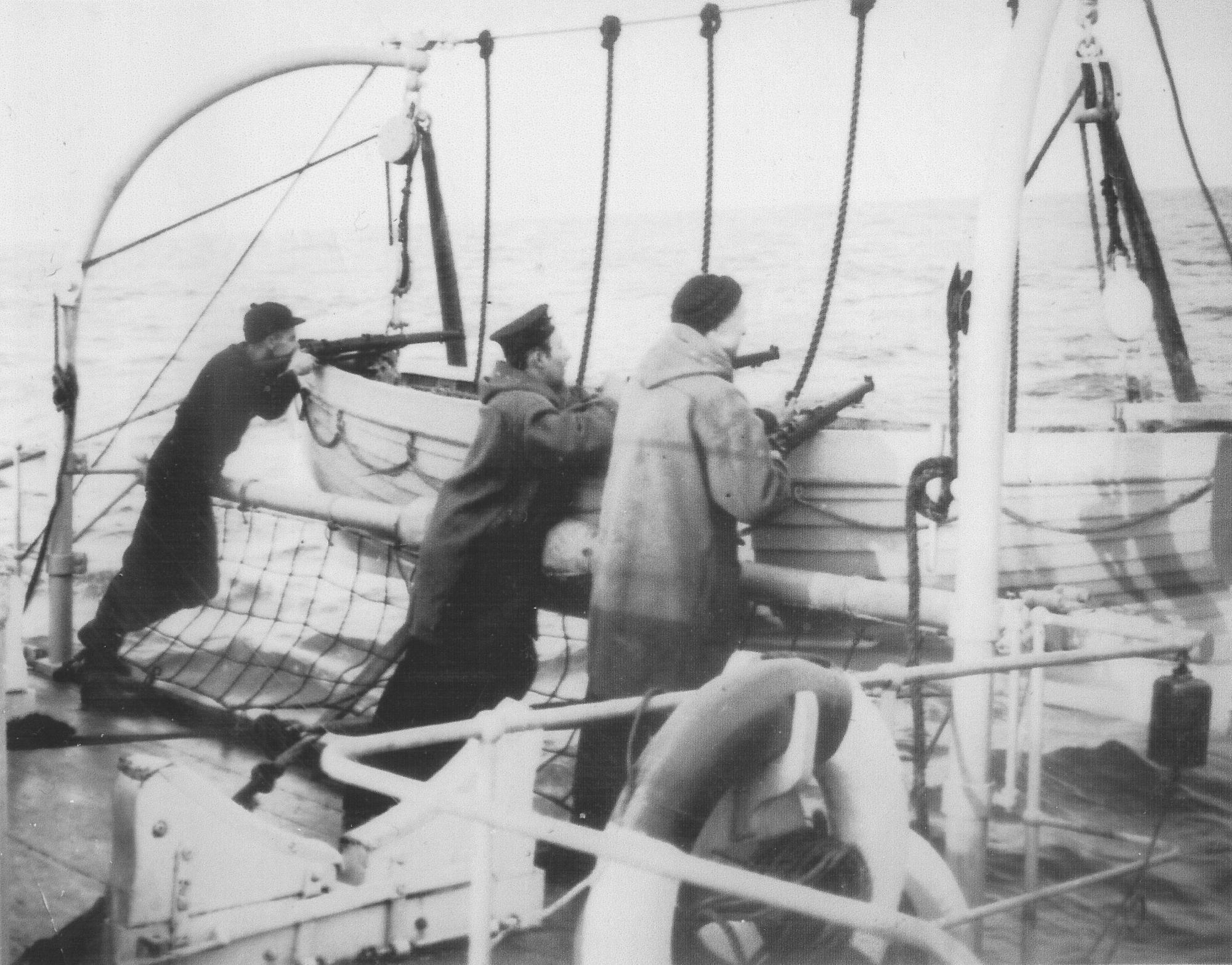
"English Channel – shooting at "loose" mine – it sank and never exploded, full of bullet holes."
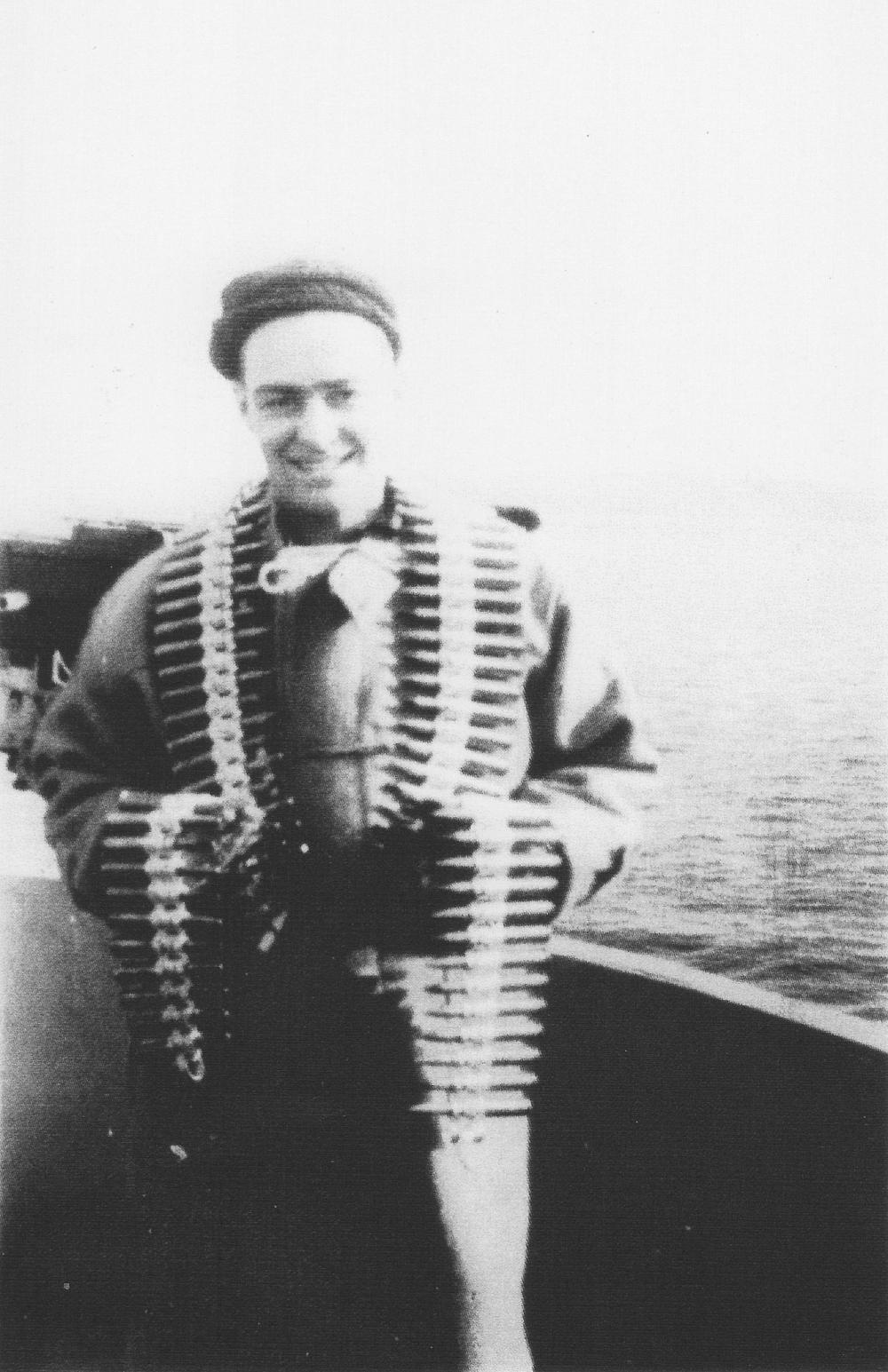
G.L. Lovitt – "Ready to load my twin barrel machine guns, 50 calibre."
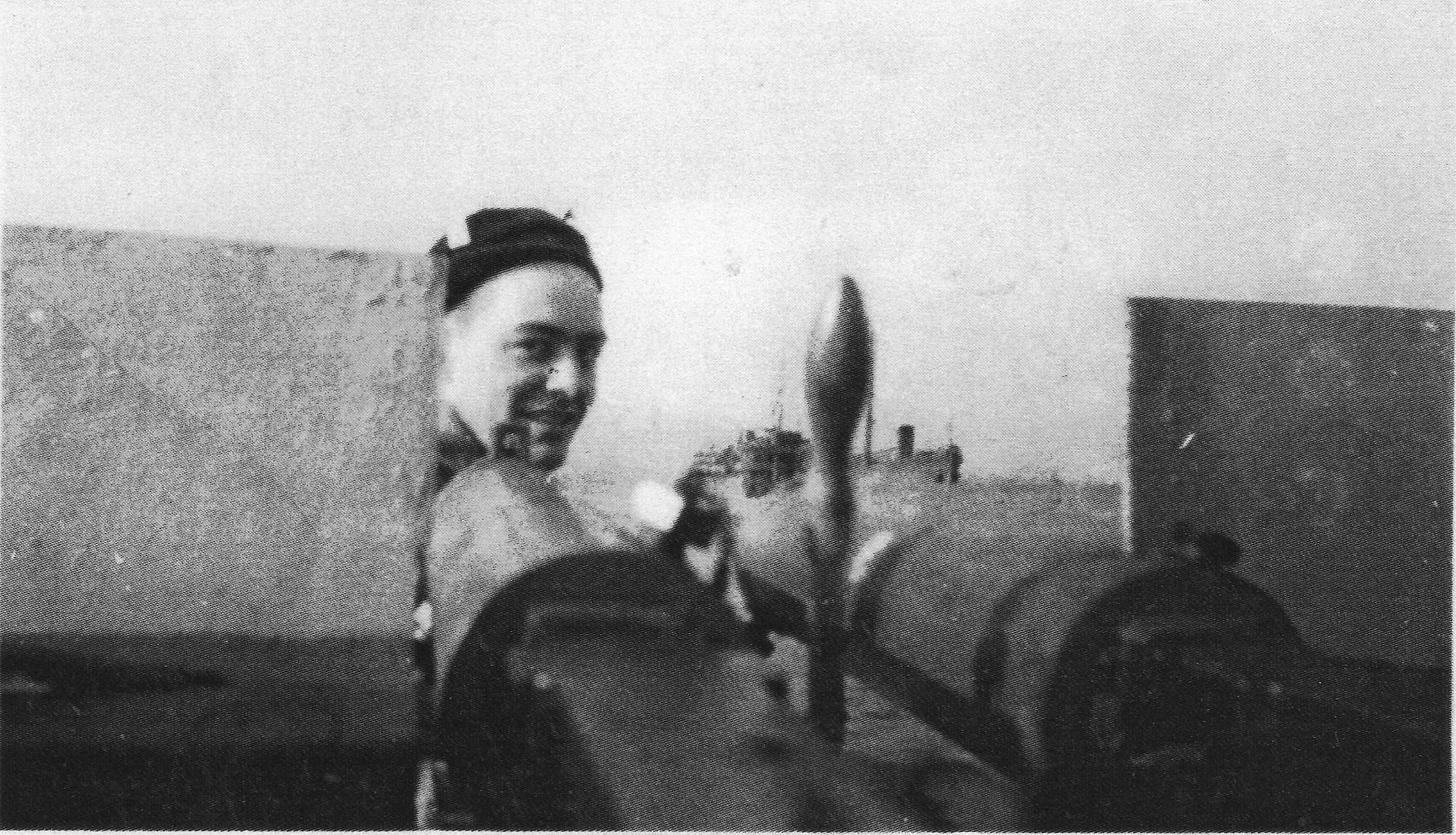
L. Lovitt – Twin point 5's, machine guns.
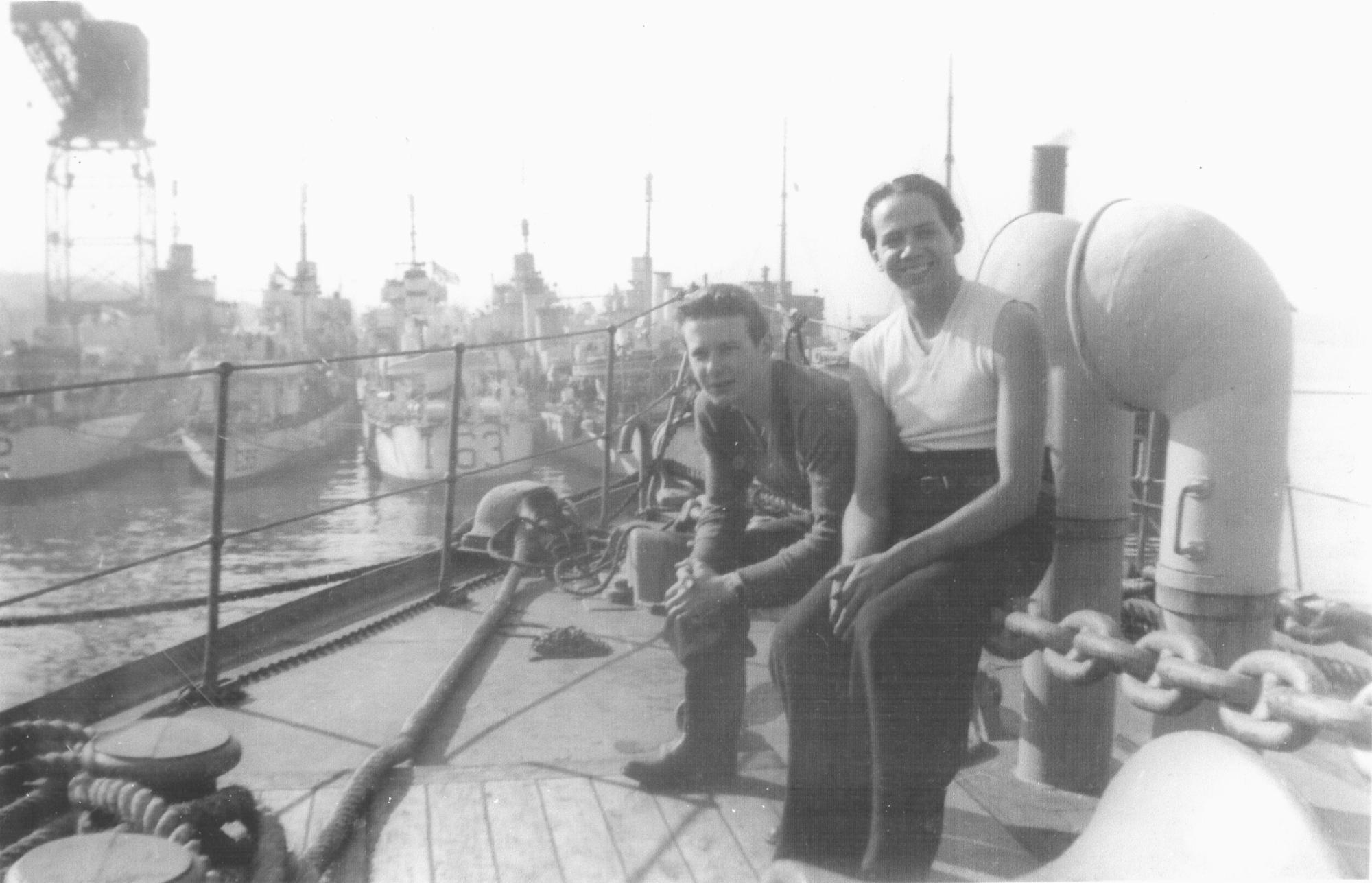
Halifax Harbour with Corvettes lined up at dock.
Up on deck – two close friends in crew of G.L. Lovitt
On left is "Army" Armstrong; on right is Luciene Terene.
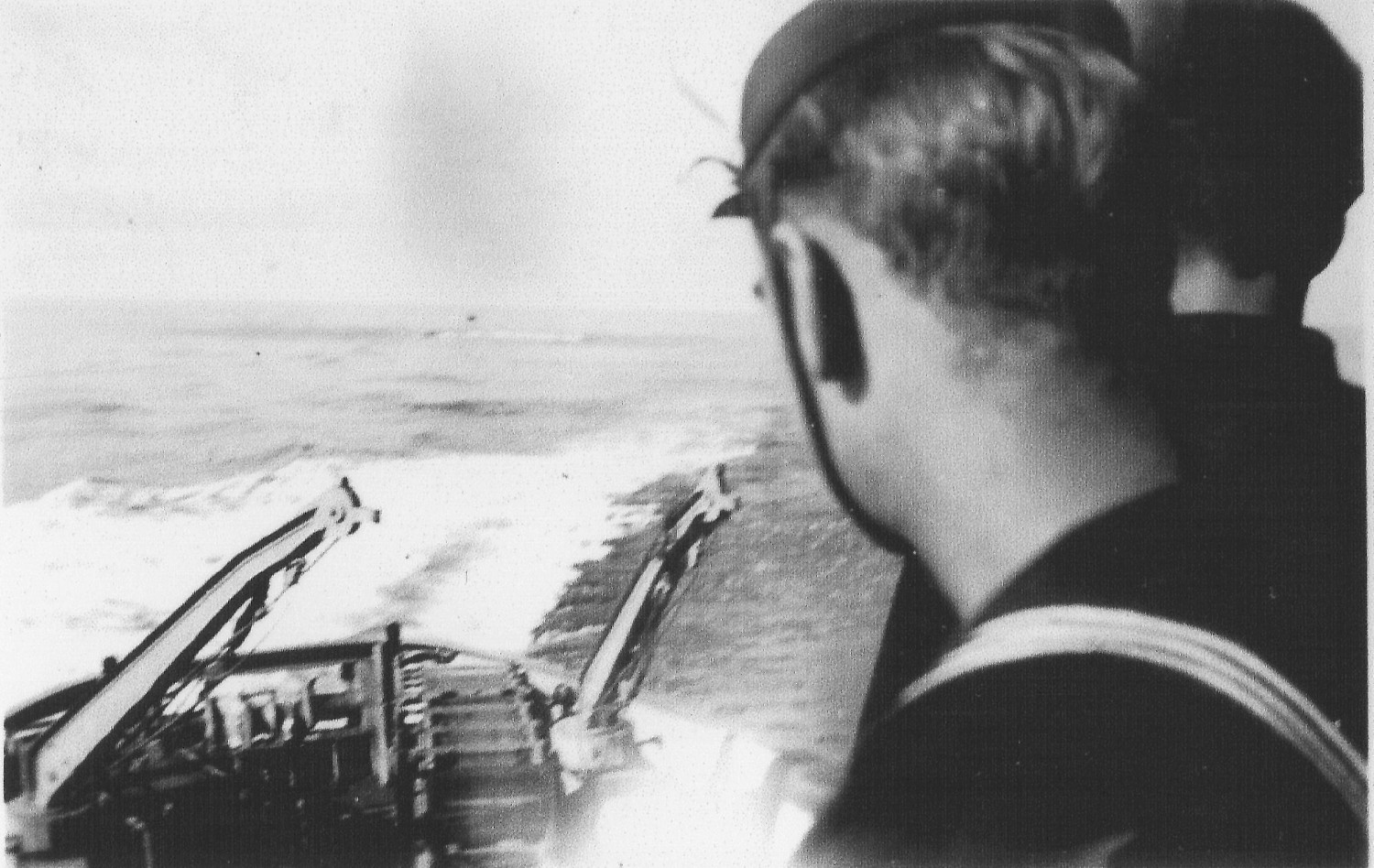
"Full Ahead" (16 Knots). Waiting for depth charges to explode.
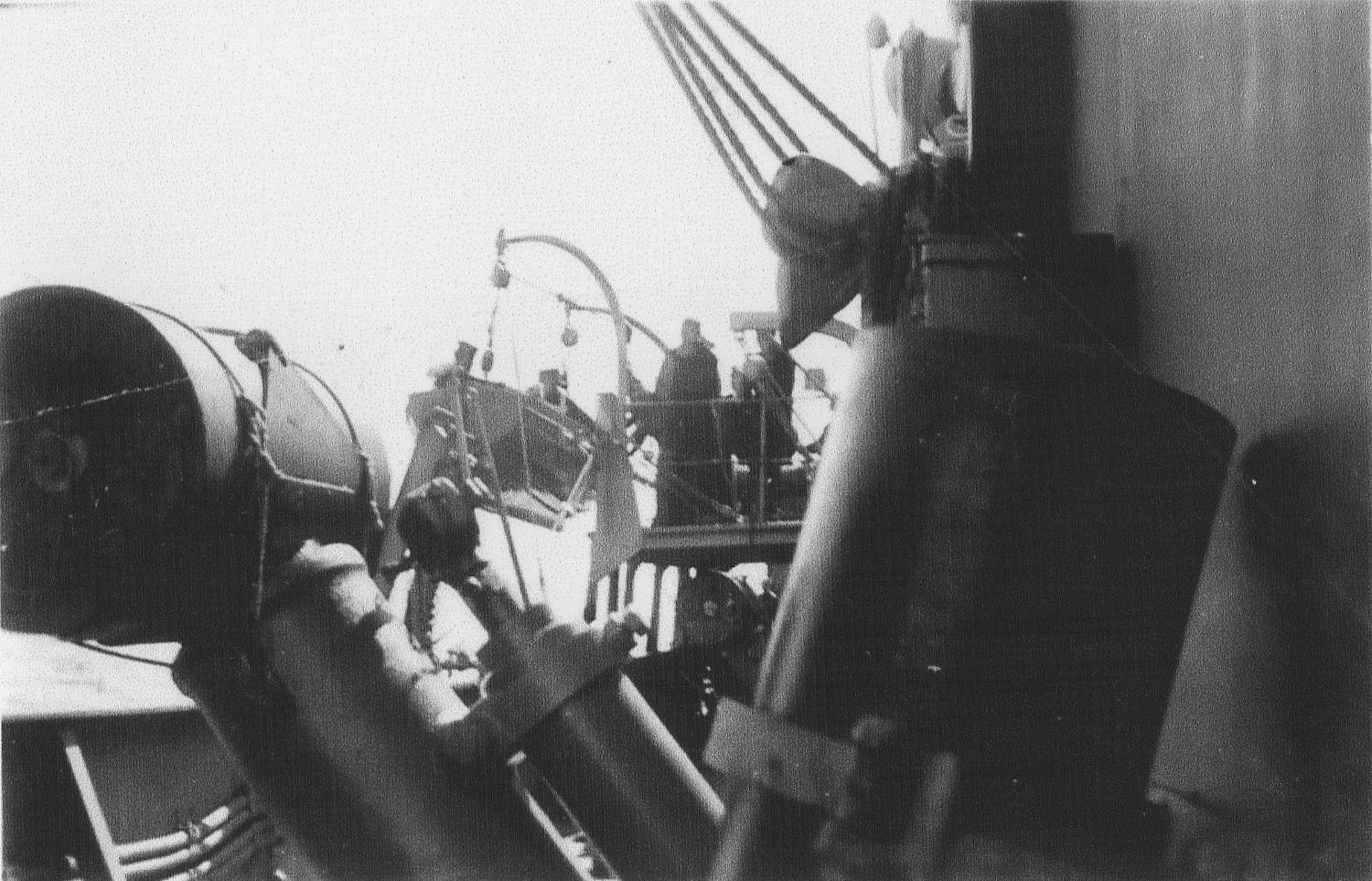
Starboard #1 Depth Charge thrower.
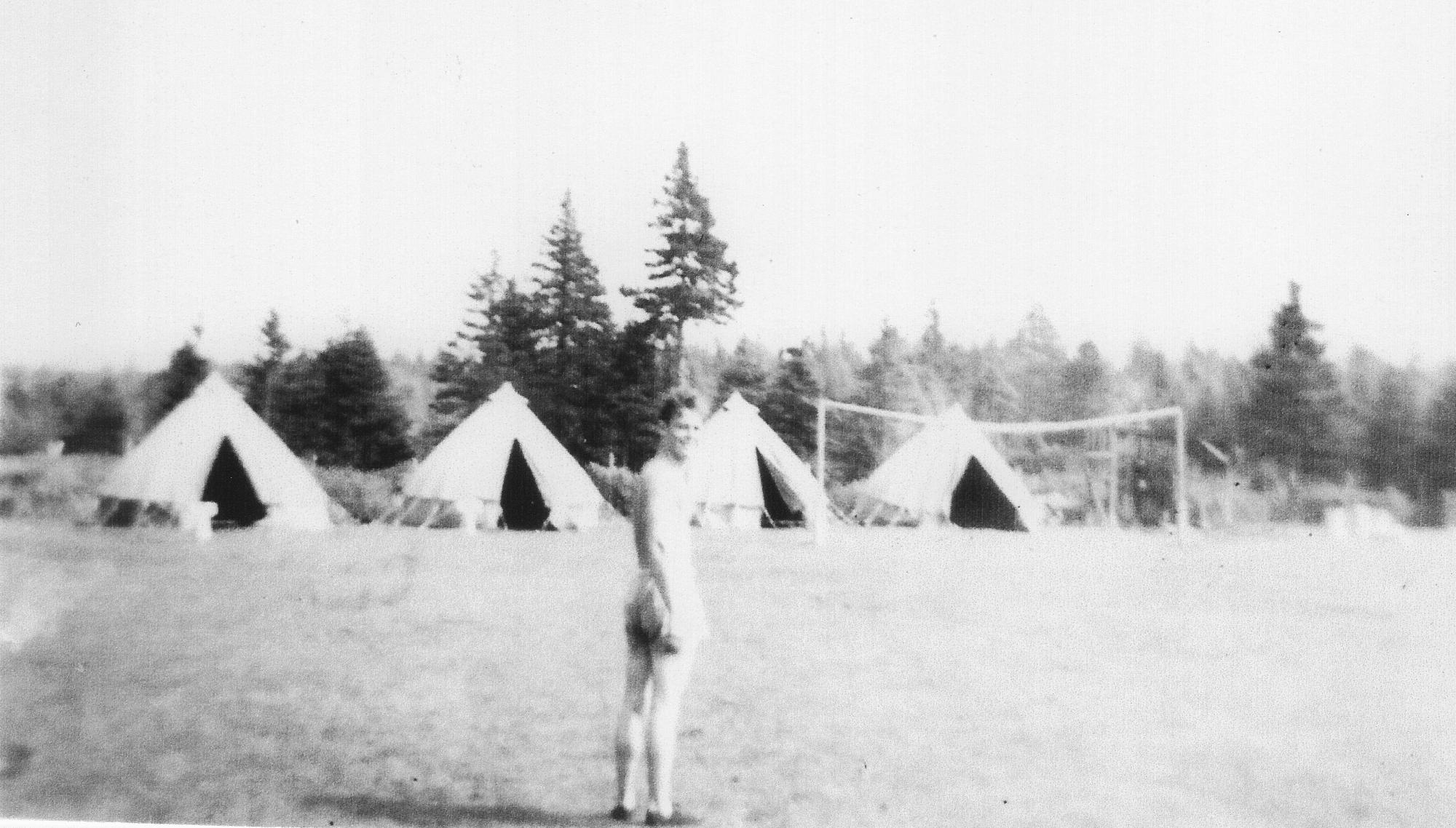
G.L. Lovitt – Corvette rest camp in Newfoundland.
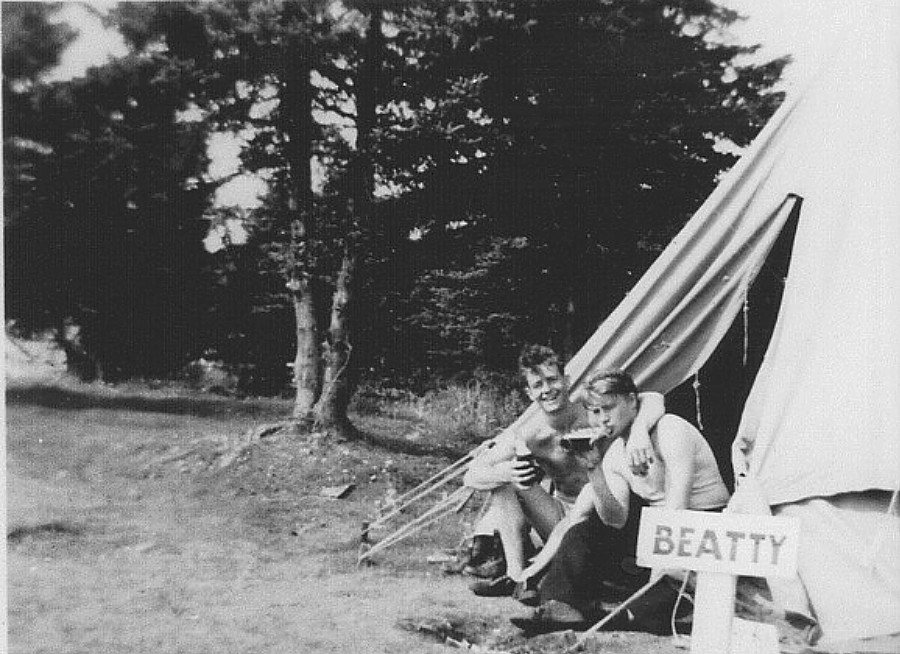
"The Beer Tent"
Corvette rest camp in Newfoundland, 1941.
Can you provide missing names, comments or corrections?
Please email Charlie Dobie.